Welcome Sign in
Product successfully added to your shopping cart
There are 0 items in your cart. There is 1 item in your cart.
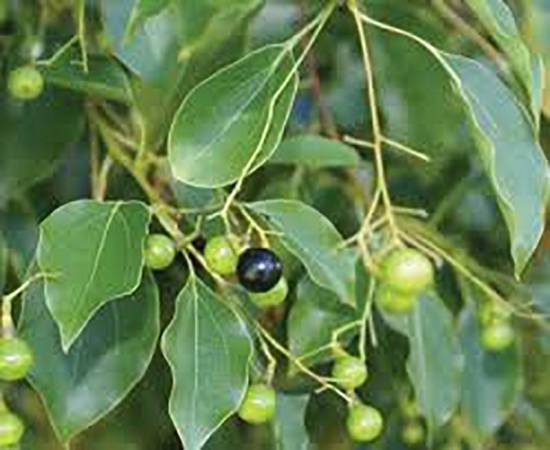

Ravensara - Ravensara aromatica
Ravensara anisata is from the Bark of the tree and Aromatica is from the leaves. Both are used for clearing the sinus and breathing passages, loosening tight muscles, relieving menstrual discomfort and aches and pains.
New
Data sheet
| County of Origin | Madagascar |
| Therapeutic Properties | Analgesic, anti-allergenic, anti-asthmatic, anti-bacterial, anti-infectious, anti-inflammatory, anti-microbial, anti-oxidant, anti-septic, anti-spasmodic, anti-viral, diuretic, energizing, expectorant, immuno-stimulant, mucolytic, stimulant, strengthening |
| Botanical Family | Lauraceae |
| Chemical Family | Monoterpenes, Monoterpenols, sesquiterpenes |
| Approx. Shelf Life | 4 years |
| Plant Parts | Leaves |
| Note Classification | Middle |
| Method of Extraction | Steam Distilled |
| Blends well with | Bay, Bergamot, Black Pepper, Cardamom, Cedarwood, Clary Sage, Clove, Copaiba Balsam, Cypress, Eucalyptus, Frankincense, Geranium, Ginger, Grapefruit, Lavender, Lemon, Mandarin, Marjoram, Oregano, Palmarosa, Pine, Rosemary, Tea Tree, Thyme, Ylang Ylang |
More info
History: Indiginous to Madagascar, Ravensara is a fairly a new oil to our market but an invaluable one it is. Its name in Malagasy means 'aromatic leaf'.
Characteristics: A top note with a medium aroma, Ravensara Essential Oil has a medicinal scent, a camphorous aroma with woody notes.
Clinical Studies:
Indications: Used for cuts, infections, wounds, herpes, asthma, flu, bronchitis, coughs, colds, allergies, muscular and physical fatigue, stimulating the immune system, ease digestion, detoxification, anxiety, stress, nervous fatigue, and depression.
Personality Profile:
Subtle Aromatherapy:
Mode of Administration: Aroma lamp, bath, inhaler, diffusor, liquid candle, light bulb ring, massage, mist spray, steam inhalation
Safety: Dilute before use; for external use only. May cause skin irritation in some individuals; a skin test is recommended prior to use. Contact with eyes should be avoided.
References:
Battaglia, S. The Complete Guide to Aromatherapy; Third Edition The International Centre of Holistic Aromatherapy, Australia, 2017
Tisserand R. Young R. Essential Oil Safety, second edition. Churchill Livingstone, UK, 2013
Sheppard-Hanger S. The Aromatherapy Practitioner Reference Manual. Atlantic Institute of Aromatherapy, USA, 2000
Caddy R. Essential Oils in Colour. Amberwood Publishing, UK, 2005
Lawless J. The encyclopedia of Essential Oils. Element Books Limited, GB, 1992
Caddy R. the Essential Blending Guide. Amberwood Publishing, UK, 2007
Weaver W.W. Sauer’s Herbal Cures. Routledge, UK, 2001
World Wide Web Encyclopedia Britannica. USA, 2014
Photo attribution – iStock Photos
LabAroma.com
AromaWeb.com
Safety Considerations:
Do not take essential oils internally.
Do not apply to eyes, sensitive areas or mucous membranes.
Do not apply undiluted to skin (for directions on proper dilution refer to an aromatherapy text).
The information on this website is not intended to diagnose or prescribe.
Pregnant women, nursing mothers and children should not use essential oils without first consulting a healthcare provider.
The statements on this website have not been evaluated by the FDA.
You should not use this information for treating a health problem or disease or to make a self-diagnosis.
Contact your Health Care provider immediately if you suspect that you have a medical problem.
Information and statements regarding Kelley products have not been evaluated by the FDA and are not intended to diagnose, treat, cure, or prevent any health condition or disease. All information, content and product descriptions contained within this site is for reference purposes and is not intended to substitute advice given by a pharmacist, physician, or other licensed health-care professional. You should not use this information for treating a health problem or disease or to make a self-diagnosis. Contact your Health Care provider immediately if you suspect that you have a medical problem.
Accessories
-
Glass eye droppers
$1.30 -
Bergamot bergapte...
$8.00 -
Cardamon - Eletta...
$18.50 -
Cedarwood, Atlas ...
$4.70 -
Copaiba Balsam - ...
$6.90 -
Cypress - Cupress...
$5.40 -
Eucalyptus Globul...
$4.50 -
Frankincense - Bo...
$17.60 -
Geranium - Pelarg...
$10.90 -
Ginger - Zingiber...
$6.30 -
Grapefruit - Citr...
$8.50 -
Lavender - Lavend...
$13.10 -
Lemon - Citrus limon
$4.90 -
Mandarin - Citrus...
$5.10 -
Marjoram sweet - ...
$11.80 -
Oregano - Origanu...
$4.50 -
Palmarosa - Cymbo...
$7.30 -
Pine Needle - Pin...
$7.00 -
Rosemary - Rosmar...
$19.20 -
Clary Sage - Salv...
$15.80 -
Tea Tree - Melale...
$6.20 -
Thyme - Thymus vu...
$14.30 -
Ylang Ylang Extra...
$19.70