Welcome Sign in
Product successfully added to your shopping cart
There are 0 items in your cart. There is 1 item in your cart.
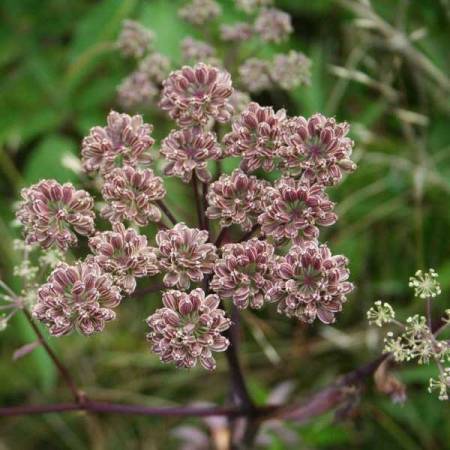
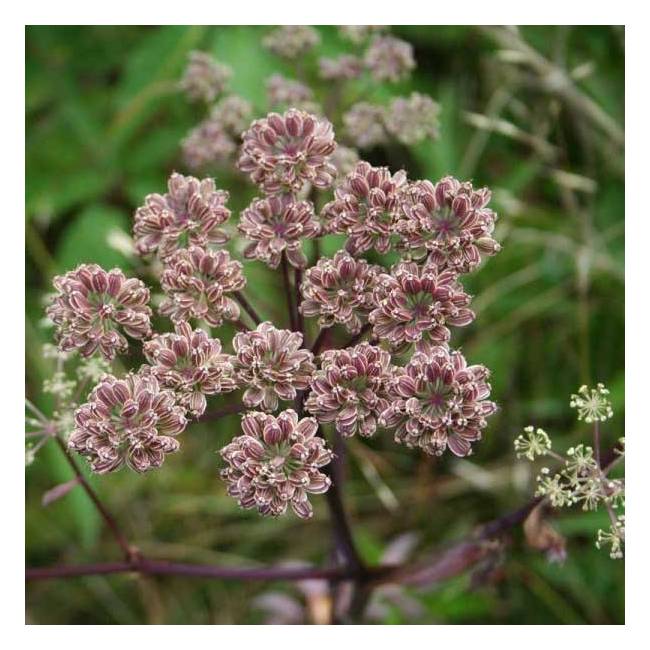
Angelica Seed (Angelica archangelica)
NOT AVAILABLE - INFORMATION ONLY This oil is great for giving your constitution a boost by invigorating the lymphatic system. It generally detoxifies the body. It can also be used to great effect on respiratory ailments and is a great help in stomach related problems; including flatulence, dyspepsia, nausea, discomfort and indigestion.
New
Data sheet
| County of Origin | France |
| Therapeutic Properties | Anti-anxiety, Anti-infectious, Anti-septic, Anti-spasmodic, Carminative, CNS tonic, Decongestant, Diuretic, Emmenagogic, Expectorant, Immuno-stimulant, Stomachic |
| Botanical Family | Apiaceae |
| Chemical Family | Monoterpene |
| Approx. Shelf Life | 4 - 5 Years |
| Plant Parts | Seed |
| Note Classification | Middle | Base |
| Method of Extraction | Steam Distilled |
| Blends well with | Patchouli, Opopanax, Costus, Sage Clary, Vetiver, Oakmoss, Coumarin, Citrus oils and Frankincense |
| GC/MS | Available upon request |
More info
History: The plant is said to originate from Africa and was introduced to Europe in the 16th century. It is considered a native plant of northern and eastern Europe, as well as parts of Asia and the Soviet Union, and is found in Scotland, Holland, Lapland and Germany.
It is called Angelica, since it normally flowers on the 8th May, which is St Michael the Archangel's Day, and for this reason it is often planted in monasteries and is referred to as "Angel Grass".
This herb is included in the famous Chartreuse and Benedictine liqueur. When the Black Plague swept Europe, the herb was considered an antidote for it, and "Angelica Water" was taken up in a Royal Prescription and published by the College of Physicians when the plague swept London in 1665. It is also used to flavor gin, perfumes, and traditionally candied for cake decoration and confectionery.
It is a rather large, water-loving herb, with broad pointed leaves dividing into smaller leaflets and has small white-green flowers. It has a strong aromatic scent and a large rhizome.
Characteristics: Is a sweet herbal smelling oil that has a spicy undertone and is also known as European Angelica.
Clinical Studies:
Indications:
Personality Profile:
Subtle Aromatherapy:
Mode of Administration:
Safety: Angelica oil oil may over stimulate the nervous system. The essential oil extracted from the root can cause photo-toxicity, which in turn could cause irritation should the skin be exposed to the sun.
Safety during pregnancy has not been determined and it should not be used by diabetics.