Welcome Sign in
Product successfully added to your shopping cart
There are 0 items in your cart. There is 1 item in your cart.
What's in a Name: It's all on the Label
Lavender, Mint, Cedarwood and Eucalyptus, to name a few, are very familiar essential oils that we know about and use but did you know that there are 27 different species in the 4 listed oils? In addition to that, all 27-different species have different therapeutic properties. Are you using the right essential oil? How do you know?
New
More info
What’s in a Name
Lavender, Mint, Cedarwood and Eucalyptus, to name a few, are very familiar essential oils that we know about and use but did you know that there are 27 different species in the 4 listed oils? In addition to that, all 27-different species have different therapeutic properties. Are you using the right essential oil? How do you know?
It’s all on the label.
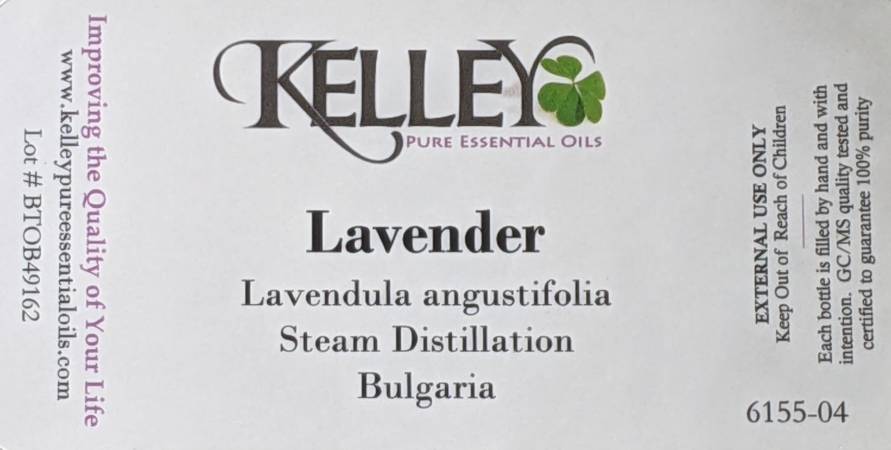
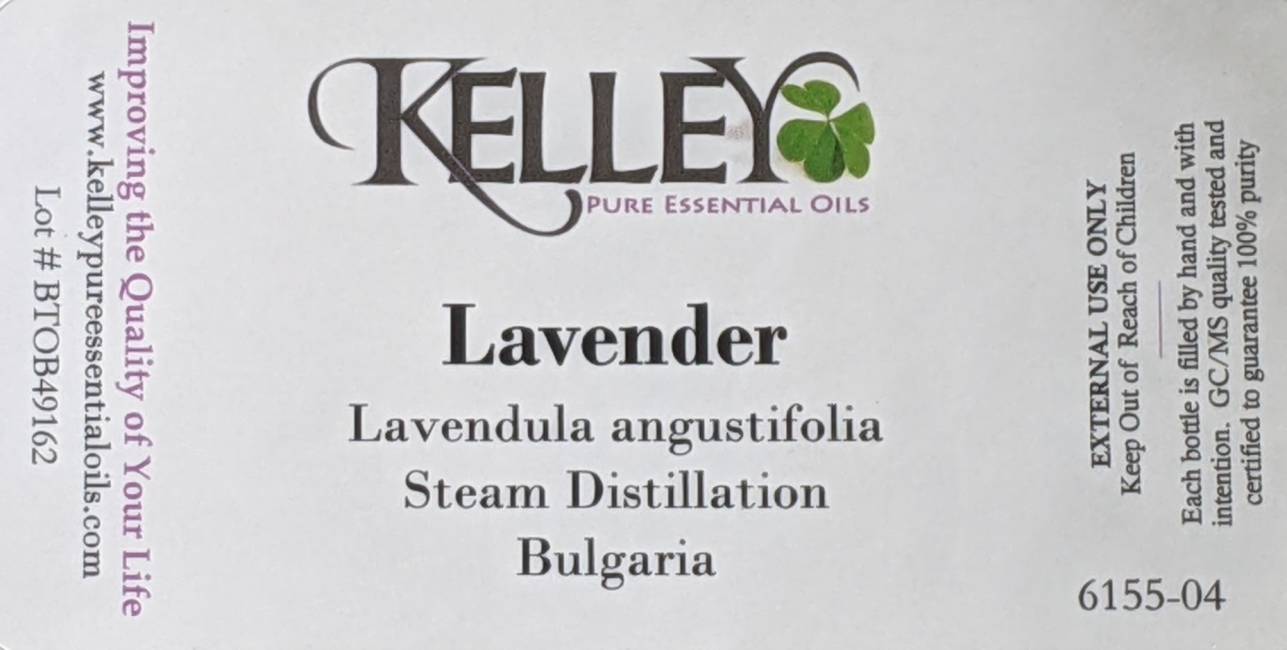
A label should have the common name, the botanical name, the part of the plant used, country of origin and the extraction process.
- Common name – The name that we commonly use.
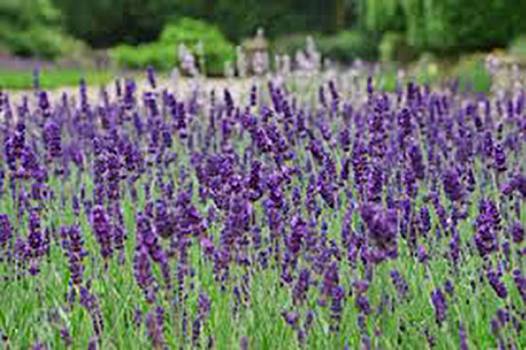
- Botanical name – The species. The botanical name is composed of the genus and the species epithet which comprise of the scientific name, usually in Latin. An example is the common lavender.
Lavandula angustifolia (True lavender) – main constituents are linalool and linalyl acetate, these make up the “lavender smell”. Because of the higher ester content, great for relaxing.
Lavandula latifolia (Spike lavender) – main constituents are linalool, 1,8-cineole (eucalyptus smell) and camphor. Great for respiratory infections, muscular aches, and insect repellent.
Lavandula x intermedia (Lavandin) – this is a hybrid of true lavender and spike lavender. Having the properties of both oils, depending on the clone.
Lavandula stoechas (Maritime lavender) – this is mainly camphor and rarely used in aromatherapy because of its possible toxicity.
All are members of the Lamiaceae family, smell like lavender but all being very different.
- Part of Plant Used – Some oils come from the whole plant, but some oils come from very specific parts of the plant. A great example is Citrus aurantium. 3 oils with the same botanical name. Neroli comes from the flowers, petitgrain comes from the leaves and bitter Orange comes from the fresh peel. All have the same botanical name but have different therapeutic properties because of the part of the plant that is used.
- Country of Origin – Essential oils are known to be grown in specific areas but can be grown in other areas as well. Being grown in the other areas also have a distinctly different chemical composition because of soil type and climate conditions. Rosemary is a good example; Rosemary grown in Spain has more camphor; good for muscle aches, Rosemary grown in North Africa has more 1,8-cineole; great for respiratory issues and Rosemary grown in France has regenerative properties.
- Extraction Process – Depending on the process, brings out different properties. Most of our oils are steam distilled but other options are other types of distillations, extraction with solvents and expression.
When choosing an essential oil, every part of the label information needs to be considered. You shouldn’t buy an oil based on just it’s price. What is your purpose, your needs, or the outcome? You will need to do your research to choose the best oil for the job and the best place to start is on the label. For more information on essential oils and their properties, visit our website at; http://www.kelleypureessentialoils.com/38-essential-oil-info
Recipes -
Daytime Stimulating Chest Rub
- 10 drops Spike Lavender (Lavendula latifolia)
- 5 drops Eucalyptus (Eucalyptus radiata)
- 5 drops Pine (Pinus sylvestris)
- 2 oz. unscented lotion
This mixture is great for day use as the lotion absorbs quickly. Massage this mixture into the chest and throat as a decongestant for most minor respiratory ailments. Add the essential oils to the lotion and apply.
Bedtime Relaxing Chest Rub
- 10 drops Lavender (Lavendula angustifolia)
- 5 drops Frankincense (Boswellia carteri)
- 5 drops Sweet Marjoram (Origanum marjorana)
- 2 oz. Sweet almond oil
This mixture is a bit oily, but it does absorb fairly quickly. The oily mixture helps slow the absorption to last thru the night. Massage this mixture into the chest and throat as a decongestant for most minor respiratory ailments. Add the essential oils to the oil and apply.
Relaxing Room Scent
- 3 drops Neroli (Citrus aurantium)
- 8 drops Mandarin (Citrus reticulata)
- 3 drops Ylang ylang Extra (Cananga odorata)
- 2 oz. water
Stress is a contributing factor in the development of cardiovascular disease and comes in many forms. You can vaporize this relaxing blend either by adding to spray bottle (shake before each use) or adding to your vaporizer. Put the water and essential oils into a spray bottle, shake and enjoy!
2022
References & Disclaimer
Safety Considerations:
Do not take essential oils internally.
Do not apply to eyes, sensitive areas or mucous membranes.
Do not apply undiluted to skin (for directions on proper dilution refer to an aromatherapy text).
The information on this website is not intended to diagnose or prescribe.
Pregnant women, nursing mothers and children should not use essential oils without first consulting a healthcare provider.
The statements on this website have not been evaluated by the FDA.
You should not use this information for treating a health problem or disease or to make a self-diagnosis.
Contact your Health Care provider immediately if you suspect that you have a medical problem.
Information and statements regarding Kelley products have not been evaluated by the FDA and are not intended to diagnose, treat, cure, or prevent any health condition or disease. All information, content and product descriptions contained within this site is for reference purposes and is not intended to substitute advice given by a pharmacist, physician, or other licensed health-care professional. You should not use this information for treating a health problem or disease or to make a self-diagnosis. Contact your Health Care provider immediately if you suspect that you have a medical problem.
Copyright © 2002 - 2022 Kelley Pure Essential Oils All Rights Reserved
No part of the material covered by this copyright may be reproduced in any form or by any means {whether electronic, mechanical, or photographic) for storage in retrieval systems, tapes discs or for making multiple copies without permission of the publisher. The information and products are to be used for personal use only, commercial use is strictly prohibited. Carefully read all materials before you begin. Neither the author nor the company can be held responsible for damage, injury or otherwise resulting from the use of the information or materials listed.
Information and statements regarding Kelley products have not been evaluated by the FDA and are not intended to diagnose, treat, cure, or prevent any health condition or disease.
References;
Battaglia, S. The Complete Guide to Aromatherapy; Third Edition the International Centre of Holistic Aromatherapy, Australia, 2017
Tisserand R. Young R. Essential Oil Safety, second edition. Churchill Livingstone, UK, 2013
Sheppard-Hanger S. The Aromatherapy Practitioner Reference Manual. Atlantic Institute of Aromatherapy, USA, 2000
Caddy R. Essential Oils in Colour. Amberwood Publishing, UK, 2005
Lawless J. The encyclopedia of Essential Oils. Element Books Limited, GB, 1992
Caddy R. the Essential Blending Guide. Amberwood Publishing, UK, 2007
Weaver W.W. Sauer’s Herbal Cures. Routledge, UK, 2001
World Wide Web Encyclopedia Britannica. USA, 2014
Photo’s attribution – iStock Photos
LabAroma.com
AromaWeb.com
Accessories
-
Frankincense - Bo...
$17.60 -
Lavender Spike - ...
$6.60 -
Marjoram sweet - ...
$11.80 -
Petitgrain - Citr...
$4.80 -
Rosemary - Rosmar...
$6.50 -
Ylang Ylang Extra...
$19.70